
"the mountain and the sea are excellent schoolmasters, and teach some of us more than we can ever learn from books." -john lubbock
Meet Our Team
The Salish Sea School is committed to cultivating and preserving a culture of diversity, inclusion, and connectedness. We are able to grow and learn better together with a diverse team. We welcome the unique contributions that one can bring in terms of their education, opinions, culture, ethnicity, race, sex, gender identity and expression, nation of origin, age, languages spoken, veteran’s status, color, religion, disability, sexual orientation and beliefs.
We are stronger together with the collective sum of individual differences, life experiences, knowledge, innovation, self-expression, and talent which ultimately brings about a healthier planet.
Click on the pictures below to learn more.

Virtual Conversations About Current Salish Sea Science and More

Dates: September '26 – May '27
(Second Wed. of each month)
9 sessions
Time: 6–7 PM PT
(Talk: 30–45 mins + 15 mins Q&A)
Cost: Tiered Pricing
$25 - Community Access
$75 - Recommended
$150 - Pay it Forward
Missed one? No problem—sign up anytime and get access to all past recordings!
Educators: Get a certificate of completion for continued learning hours by letting us know in the registration form.
Got questions? FAQs found here.
Join us on the second Wednesday of each month for The Pulse—a virtual learning series designed for environmental educators, marine naturalists, and curious nature lovers alike.
Tune in from anywhere in the world as we dive deeper into Salish Sea themed monthly conversations on big-picture topics, emerging research, and inspiring stories—all from the comfort of home.
Fall 2026 - Spring 2027 registration is now open!
The Pulse is a welcoming monthly community of learners—where science comes alive and connections are made. Enroll anytime to join live talks and receive instant access to past recordings, delivered straight to your inbox.

2026- 2027 Speakers

A Human and Natural History of the Puget Sound
With David Williams
Description: Williams will tell the long story of the Sound, tracing human history from the earliest records more than 12,500 years ago to present. He will consider often overlooked species such as Olympia oysters, rockfish, geoduck, kelp, and herring, as well as salmon and orca. Witty, graceful, and deeply informed, his talk presents a fascinating and hopeful narrative, one that will introduce newcomers to the astonishing life that inhabits Puget Sound and offers longtime residents new insights into and appreciation of the waters they call home.
Speaker Bio: David B. Williams is an author, naturalist, and tour guide whose award-winning books include Homewaters: A Human and Natural History of Puget Sound and Too High and Too Steep: Reshaping Seattle’s Topography, as well as Seattle Walks: Discovering History and Nature in the City. His newest book, Wild in Seattle: Stories at the Crossroads of People and Nature is a best of collection from his free weekly Substack newsletter, the Street Smart Naturalist.

The Secret Lives of Harbor Porpoises
With Dr. Cindy Elliser
Description: Harbor porpoises are one of the most abundant marine mammal species in the Salish Sea, but can often be shy, making them difficult to observe. Pacific Mammal Research has spent over 10 years uncovering the secret lives of these elusive animals. Through ground breaking photo-identification work we have tracked animals over time showing they, and their calves, return to this area regularly for up to 11 years! Our behavioral observations have helped to describe their exciting aerial mating behavior and better understand their foraging ecology, which includes unique behaviors like hunting salmon. Our new video drone work has revealed even more about the underwater behavior – social interactions, foraging techniques and more. Working with colleagues around the world PacMam’s research is helping to reveal the complex behaviors of harbor porpoises as a species, and how important they are to the Salish Sea.
Speaker Bio: Dr. Cindy R. Elliser is the Founder and Research Director of Pacific Mammal Research (PacMam) and also the Associate Director of the Salish Sea Institute (SSI) at Western Washington University. Her research with PacMam focuses on the behavioral ecology of harbor porpoises and harbor seals in the Salish Sea, and over the last decade, PacMam has become a leader in harbor porpoise photo-ID and behavioral research. Her research interests focus on knowing the individuals in a population to better understand their behavior, ecology and population structure. As Associate Director of SSI, Dr. Elliser supports and engages with the public, researchers, and policy makers. through science communication, research and education on a wide variety of topics in the Salish Sea, with a focus on the transboundary nature of this region. All her work aims to protect and conserve the Salish Sea and the marine mammals who call it home.

People for Puffins
with Olivia Fross
Description: Seabirds have seen a dramatic decline in the last 100 years - and here in the Salish Sea Tufted Puffins and Marbled Murrelets are two of the most endangered seabirds. Follow along with Olivia Fross, Ornithologist and Research Coordinator for The Salish Sea School to learn how citizen science is making a difference in the race to save these two incredible species of birds.
Speaker Bio:
Olivia is The Salish Sea School's lead Ornithologist and research coordinator - where she leads Tufted Puffin and Marbled Murrelet citizen science initiatives. She has years of experience as an outdoor educator at Thorne Nature Experience in Colorado and just graduated from the University of Puget Sound with a degree in Biology with an emphasis on seabirds.
Olivia has spent years researching Tufted Puffins and other seabirds in the Salish Sea and recently spent a summer as a Whale Watching naturalist in Anacortes. Her enthusiasm for the natural world is contagious and she is committed to fostering Earth stewardship through wildlife research and environmental education.

Basking Sharks of the Salish Sea
Dr. Alexandra McInturf
Description: Now almost forgotten, the Basking Shark (Cetorhinusmaximus)- the 2nd largest fish on the planet and the largest in our shared waters -used to be abundant from British Columbia, Canada to Baja California, Mexico. Hunted and persecuted for decades, they have since virtually disappeared from the coastal waters of the Northeast Pacific Ocean. Today, most residents are unaware that this fascinating, gentle giant ever graced our waters, making the Basking Shark a sad “poster fish” for the “shifting baseline syndrome". How do we make up for this lack of human experience and memory? Can this enigmatic wonder of our ocean world that has survived as a species for at least 30 million years recover here in the Northeast Pacific Ocean? How has our treatment of them shifted and what might we do to better understand them and their habitat, and “turn the tide” for them, and for us?
Speaker Bio:
Originally from Cincinnati, Ohio, I graduated Cum Laude from Williams College (MA) with degrees (B.A.) in Biology and English in 2015. I received my PhD in Animal Behavior from the University of California, Davis in 2021. I am currently a Research Associate at Oregon State University’s Big Fish Lab and Graduate Faculty in OSU’s Departments of Fisheries, Wildlife, and Conservation Sciences and Environmental Sciences. My research generally focuses on how marine organisms respond to biotic (living) and abiotic (non-living) environmental variables. I use this information to contextualize and predict behavior, movement patterns, and survival. I explore this topic in threatened marine fishes.
Finally, I am an avid science communicator and have developed and led graduate-level courses on this topic. In addition to my personal SciComm endeavors, I co-coordinate the Irish Basking Shark Group, an outreach, research, and education organization dedicated to basking sharks in Irish waters.

Seabirds and Climate Change
With Kim Adelson
Description: There are over 350 species of seabirds worldwide, and nearly 70% are facing declining populations as climate change makes living in the challenging world of the ocean even more difficult. Kim Adelson will dive deep into what defines this special group of birds, what specific challenges they faces - and how we can help make sure they continue to soar above the waves for generations to come.
Speaker Bio: Kim Adelson was a professor of psychology for almost 30 years; she has won teaching awards at 3
different universities. Before she switched fields so as to focus on behavioral and intellectual evolution,
she earned a master’s degree in evolutionary biology. Paleontology has been one of her avocations since
she was a child who wandered the halls of the American Museum of Natural History in New York. She is
an avid birder and is on the Vice President and Education Chair of the South Sound Bird Alliance
(formerly the Black Hills Audubon Society); she is also the Southwest Region representative to Audubon
Washington.

Conserving The Salish Sea's Kelp Forests
with Jeff Whitty, Northwest Straits Commission
Description: Puget Sound kelp forests provide vital habitat to numerous marine species, fuel food webs, and are important to the lifeways of many local cultures. However, kelp forests are declining in regions of Puget Sound due to human and climatic-induced stressors. In this talk, we will explore these topics in addition to efforts to conserve and recover these forests, including the Puget Sound Kelp Conservation and Recovery Plan, a collaborative tool that provides a research and management framework for coordinated
action for kelp conservation and recovery.
Speaker Bio: Puget Sound kelp forests provide vital habitat to numerous marine species, fuel food webs, and are important to the lifeways of many local cultures. However, kelp forests are declining in regions of Puget Sound due to human and climatic-induced stressors. In this talk, we will explore these topics in addition to efforts to conserve and recover these forests, including the Puget Sound Kelp Conservation and Recovery Plan, a collaborative tool that provides a research and management framework for coordinated action for kelp conservation and recovery.

In Company of Gray Whales with David W. Weller, Ph.D.
Description: Dr. David Weller has been studying the biology and ecology of whales and dolphins for 40 years. His specialization is in the areas of wildlife science, population assessment and evaluation of potential disturbance impacts from human activities. He received his Ph.D. in Wildlife and Fisheries Sciences from Texas A&M University in 1998. Prior to that, he completed B.A. and M.A. degrees at the University of Hawaii and San Diego State University, respectively. He has been in residence at Southwest Fisheries Science Center since 1998. Dave has decades of experience designing field projects, collecting data and completing analyses to produce scientific end products. He has supervised multi-cultural field teams in remote and often dangerous conditions as well as overseeing laboratory and analytical work. A major component of his research since 1997 has been focused on gray whales and he has authored or co-authored 90+ papers or reports on this species. These papers cover both the eastern and western North Pacific, including areas off Mexico, California, Canada, Russia, Korea, Japan and China.

The Future of Salmon and Southern Resident Killer Whales
with Misty MacDuffee, Raincoast Conservation Alliance
Description:
The Southern Resident killer whales are an iconic part of the Salish Sea. Like many people, these whales prefer Chinook salmon. But not all Chinook are equally valuable to them. In this presentation, Misty will explore why some Chinook are better prey than others, how fisheries and other factors are driving declines in salmon size and age, what this means for killer whales, and what can be done to rebuild the salmon these revered killer whales depend on.
Speaker Bio:
Misty MacDuffee is a salmon biologist and Director of the Wild Salmon Program at the Raincoast Conservation Foundation in British Columbia. Her work focuses on the ecology and management of Chinook salmon, particularly their role as the primary prey of Southern Resident killer whales. Her current research examines how fisheries are driving declines in the size and age of Chinook salmon, reducing prey quality for killer whales, and examining solutions that could help rebuild larger, more resilient salmon populations. Misty works to bring this science into fisheries policy and management to support both Chinook salmon and the endangered whales that depend on them.
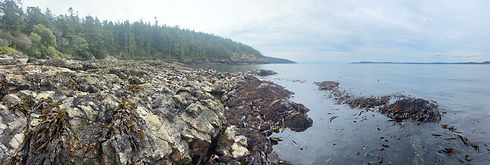
Indigenous Management of Clam Gardens
with Marco Hatch PhD., WWU
Speaker Bio:
Marco Hatch is an Associate Professor of Environmental Science at the College of the Environment, Western Washington University. Marco is marine ecologist with a Ph.D. in Biological Oceanography from Scripps Institution of Oceanography and a member of the Samish Indian Nation. Prior to WWU he directed the Salish Sea Research Center at Northwest Indian College. His research weaves traditional ecological knowledge and marine science through the exploration of food systems. He is currently co-PI for the NSF funded Native Food, Energy, Water Systems INCLUDES Alliance and a Pew Marine Conservation Fellow. Hatch is on the Board of Trustees for the Washington Chapter of the Nature Conservancy and an Advisory Committee member for the UN Decade Northeast Pacific Collaborative Center.

2025/2026 Season
Description: Receive access to all episodes of the 2025/2026 The Pulse plus two bonus episodes!
Topics include:
-
My Octopus Teacher with Craig Foster
-
Killer Whales with Dr. Deborah Giles
-
Marsh Beavers with Dr. Greg Hood
-
Return of the Giants with John Calambokidis
-
Guardians of the Pod with Dr. Darren Croft
-
Ecology of Hummingbirds with Greg Green
-
Olympia Oyster Restoration with Jessi Florendo (they/them)
-
Lummi Island Reef Netting with Ian Kirouac
-
Dinosaurs Amongst Us with Kim Adelson
-
Tufted Puffins in a Dynamic Seascape with Dr. Scott Pearson
Cost: $69

Get Access Previous The Pulse Seasons